Best Remote Access Software for Tech Support: A Concise Comparison for Secure and Efficient IT Support
Remote access software for tech support enables technicians to view, control, and repair a client’s device from anywhere, using encrypted connections and session tools to diagnose issues without onsite visits. This concise comparison explains which capabilities matter most for secure and efficient IT support, compares leading tools in the 2024 market, and gives practical guidance for choosing software that minimizes time-to-fix while protecting client data. Many support teams struggle with slow sessions, poor unattended access, or unclear audit trails; selecting the right remote desktop solution reduces those pain points and improves SLA adherence. The article covers key evaluation features, short vendor profiles with use-case mappings, integration patterns for professional support workflows, and a decision framework aligned to business type and compliance needs. Throughout, we emphasize security, performance, and usability — with targeted lists, comparison tables, and real-world examples to make tool selection actionable for help desks, MSPs, and solo technicians. Read on to learn how to match remote access tools to your operational priorities and how service providers integrate those tools to deliver fast, secure repairs.
What Are the Key Features to Consider in Remote Support Software?
Remote support software is the set of capabilities that enable a technician to securely access, diagnose, and remediate problems on a remote device; these capabilities matter because they directly affect repair speed, client trust, and regulatory compliance. Core reasons to focus on capabilities are straightforward: security controls protect client data, performance attributes determine responsiveness during live troubleshooting, and usability features reduce technician time-to-fix. Below is a concise mapping of features to the attributes tech teams care about when delivering remote repairs and support. Consider each feature as a component in an operational stack that together affects repair success and customer experience.
Key feature checklist for evaluation:
- Encryption & MFA: Strong transport and at-rest encryption plus multi-factor authentication protect sessions and credentials.
- Unattended access: Persistent agents and secure unattended modules enable scheduled maintenance with consent.
- File transfer & session tools: Clipboard sync, multi-monitor support, and secure file transfer speed recovery and patching.
These features form the baseline for secure, efficient remote support and lead into specific security controls technicians should demand from a vendor.
Which Security Measures Ensure Safe Remote Access?
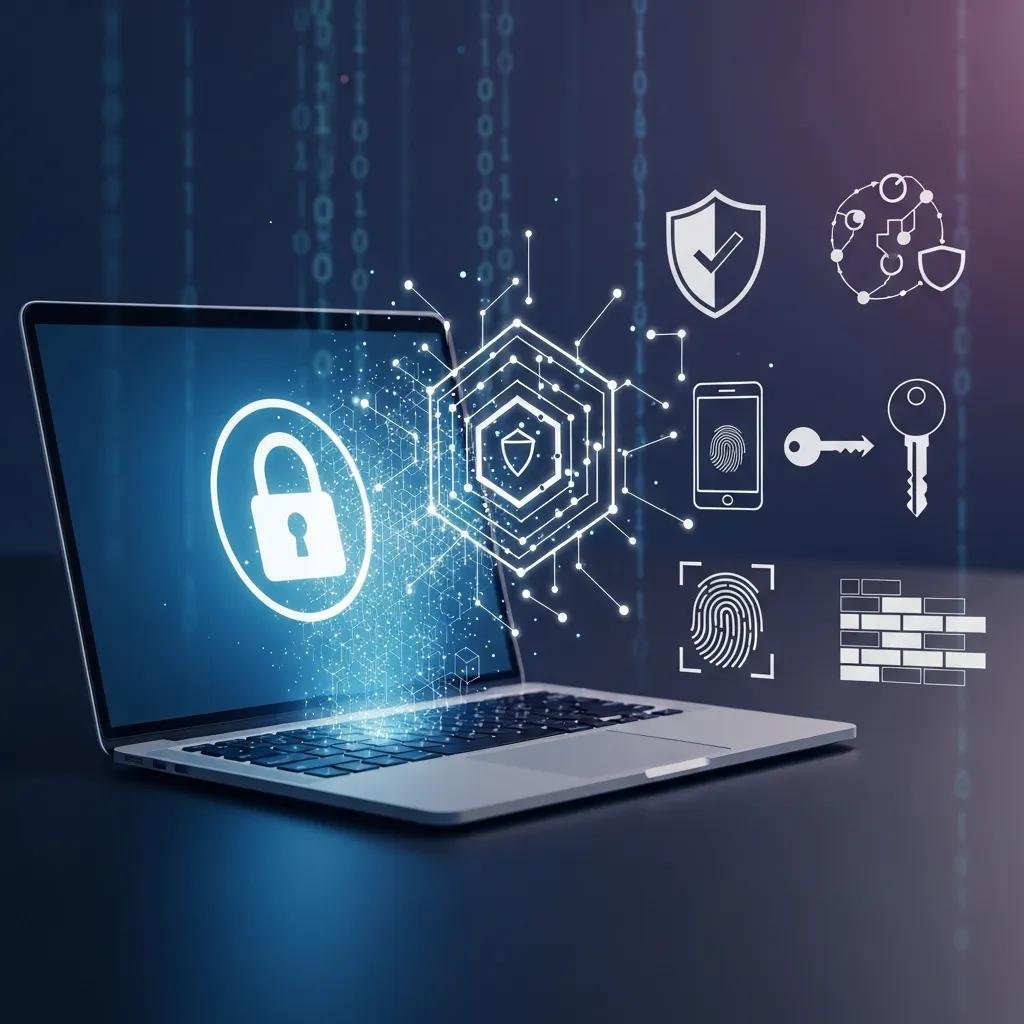
Secure remote access relies on specific controls: end-to-end encryption, multi-factor authentication (MFA), granular role-based permissions, and session logging with consent workflows. End-to-end encryption ensures session data cannot be read in transit, while MFA and role-based access reduce the risk of credential compromise and limit what a technician account can do during a session. Session recording, audit logs, and explicit client consent provide forensic evidence and transparency for compliance frameworks such as GDPR or sector-specific rules, which boosts client trust during incident response. Implementing these controls in daily workflows helps technicians perform tasks like virus removal with auditable steps and protects sensitive data during recovery operations.
How Do Performance and Usability Impact Tech Support Efficiency?
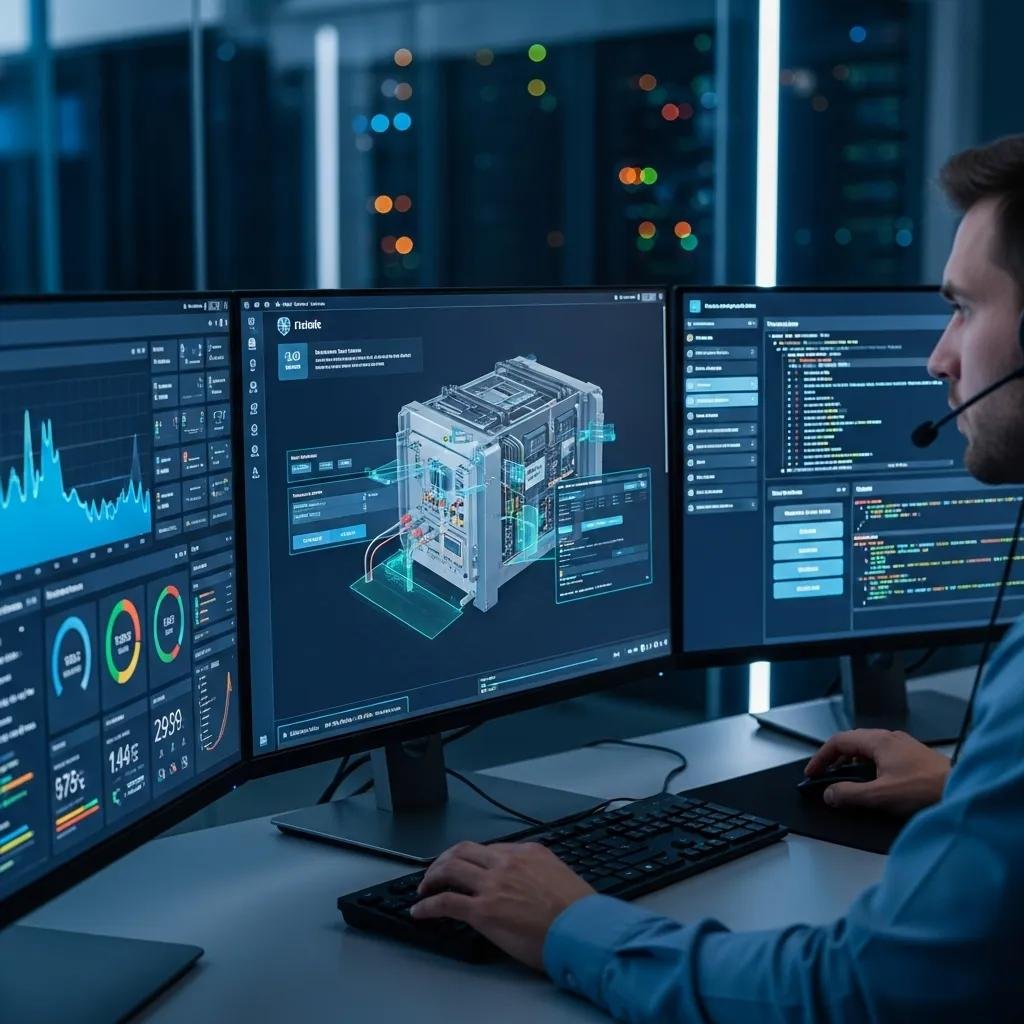
Performance and usability determine how quickly a technician can identify and resolve issues: low latency, efficient bandwidth use, and responsive frame rates make GUI navigation and remote diagnostics practical. Lightweight clients and rapid session initiation reduce time-to-first-action, improving average handle time and customer satisfaction. Usability features such as secure file transfer, clipboard sync, chat, and multi-monitor switching let technicians perform common remediation tasks without awkward workarounds. Balancing high visual fidelity against bandwidth consumption is important for remote desktop sessions, and choosing a tool with adaptive compression often provides the best compromise between speed and clarity.
| Feature | Security / Performance / Usability Attribute | Why it matters for tech support |
|---|---|---|
| End-to-end encryption | Security | Protects session data from interception during diagnostics |
| Unattended access agent | Usability | Enables scheduled maintenance and reduces repeat setup time |
| Adaptive codec & bandwidth control | Performance | Keeps sessions responsive on constrained networks |
| Session recording & audit logs | Security | Provides evidence for compliance and post-incident review |
This feature table clarifies what to prioritize when selecting a remote support platform and prepares you for vendor-level comparisons.
Which Remote Access Tools Are Leading in 2024 for IT Support?
Leading remote access tools in 2024 combine security, speed, and manageability; a short list of top options and what they excel at helps match tools to support workflows. Current market leaders include established hyponyms that vary in performance characteristics, enterprise features, and cost models. Below is a concise vendor mapping that highlights each tool’s differentiator and ideal use-case for technicians and MSPs.
Top tools at a glance:
- TeamViewer: Broad feature set and mature security controls make it suitable for enterprise help desks.
- AnyDesk: High-performance engine and efficient codecs favor responsive sessions for geographically dispersed users.
- Splashtop: Cost-effective and fast for small-to-medium business maintenance and labs.
- Zoho Assist: Integrated help-desk-friendly workflows that fit SMBs using broader service suites.
Each of these tools maps to particular support scenarios, and the table below summarizes standout features and best use cases.
| Tool | Key Features | Best Use Case |
|---|---|---|
| TeamViewer | Rich admin controls, role permissions, enterprise integrations | Large enterprises and regulated environments |
| AnyDesk | Low-latency engine, efficient codecs, flexible licensing | Remote-first teams needing high responsiveness |
| Splashtop | Competitive pricing, good performance for SMBs | Small business IT maintenance and labs |
| Zoho Assist | Help desk integration, easy session workflows | Service teams using CRM/helpdesk ecosystems |
What Are the Strengths and Limitations of TeamViewer and AnyDesk?
TeamViewer offers comprehensive enterprise controls, centralized management, device inventory, and robust security modules, but its licensing and feature-rich interface can introduce complexity for small teams. AnyDesk provides a lightweight, high-performance engine with responsive remote control and flexible licensing that often reduces cost for distributed technicians; however, enterprise-grade management features may be less extensive than mature competitors. Choosing between them depends on whether your priority is broad enterprise integration and governance (TeamViewer) or raw session responsiveness and cost efficiency (AnyDesk). These trade-offs guide pilot testing and procurement decisions for help desks evaluating performance versus administrative features.
How Do Splashtop and Zoho Assist Compare for Remote Tech Support?
Splashtop is designed for cost-conscious SMBs and labs, delivering solid performance and straightforward unattended access at competitive price points, while Zoho Assist favors help-desk workflows with built-in session ticketing and CRM alignment. Splashtop’s simplicity reduces onboarding time for technicians who need reliable, repeatable connections; Zoho Assist benefits teams that prioritize ticket-driven workflows and integration with broader service stacks. The trade-offs are clear: choose Splashtop for lean operations focused on cost and speed, and choose Zoho Assist when integration with customer records and service processes improves operational efficiency.
| Tool | Feature Strength | Typical Buyer |
|---|---|---|
| Splashtop | Cost-effectiveness, performance | SMBs, labs |
| Zoho Assist | Helpdesk integration, ticket workflows | Support teams using CRM ecosystems |
| AnyDesk | Speed, codec efficiency | Remote-first teams |
| TeamViewer | Governance, enterprise features | Large enterprises, regulated industries |
This EAV table helps map tool selection to organizational priorities and expected trade-offs.
How Does Remote Access Software Integrate into Professional Tech Support Services?
Remote access software integrates into professional tech support through defined workflows that combine diagnostics, remediation steps, and reporting; this integration affects KPIs like time-to-fix, first-contact resolution, and operational cost. Typical technician workflows start with secure session initiation, remote diagnostics using log capture and live tools, performing remediation via file transfer or command execution, and closing with recorded notes or session logs for audit. Automating unattended access for scheduled patching reduces repetitive labor and prevents downtime, while session recording supports incident reviews and compliance reporting. Integrating the chosen tool into ticketing, asset inventory, and change-control processes is critical to scale reliable remote repair services and maintain client trust.
What Are Real-World Use Cases for Remote Repair and Virus Removal?
Common use cases include live virus removal, where a technician runs scans and removes malware while preserving evidence via session logs, and system speed-up work that requires installing cleanup utilities and reboot sequences. Another frequent scenario is data recovery support where technicians securely transfer recovered files to a client-approved location while maintaining logs for chain-of-custody. Service providers use unattended agents for scheduled maintenance such as patching and backups to reduce recurring break/fix incidents. As an example of operational integration, a remote computer repair service can offer 24/7 remote assistance, prioritize fast session establishment, and back work with a “no fix – no fee” guarantee to align incentives with customer outcomes.
How Does Software Choice Affect Client Data Privacy and Service Speed?
Software architecture—peer-to-peer versus cloud-relay—directly influences both privacy and speed: P2P can minimize third-party handling of session data and provide lower latency, while cloud relay may simplify connectivity behind strict NATs but introduces additional hosting considerations. Privacy controls such as explicit client consent prompts, granular permission scopes, and robust audit logging ensure transparency and protect sensitive information during operations like data recovery. From a speed perspective, codecs and adaptive compression determine how usable a GUI session is over limited bandwidth. Technicians should prefer solutions that balance minimal data exposure with efficient connection methods to preserve both privacy and responsiveness.
| Integration Aspect | Operational Impact | Recommended Practice |
|---|---|---|
| Unattended agents | Reduces manual session setup | Use secure, consented agents with rotation of credentials |
| Session logging | Improves compliance and troubleshooting | Enable recording and retain logs per policy |
| Architecture (P2P vs cloud) | Affects privacy and latency | Choose P2P where privacy is paramount and cloud relay where NAT traversal is needed |
These integration patterns show how tool attributes map to operational outcomes and support business KPIs for remote services.
How to Choose the Right Remote Desktop Software for Your IT Support Needs?
Choosing the right remote desktop software requires matching tool capabilities to your business type, compliance requirements, and technician workflows so you can optimize total cost of ownership and repair efficiency. Start by assessing security needs, expected session volumes, unattended maintenance requirements, and whether ticketing or CRM integration is required. Next, evaluate licensing models relative to technician headcount and device counts to determine predictable costs. Finally, pilot shortlisted tools under real-world conditions to measure time-to-fix, connection reliability, and administrative overhead before committing to a subscription. Below is a compact decision guide to help quickly map priorities to tool categories and a table that aligns business types with recommended tool types.
Decision checklist (If X, choose Y):
- If you need enterprise governance and auditability, choose enterprise-focused platforms with strong admin controls.
- If low-latency, high-frame-rate sessions are crucial, choose high-performance engines optimized for bandwidth efficiency.
- If cost and quick deployment matter for small teams, choose cost-effective SMB-focused tools with straightforward unattended agents.
These decision rules make pilot planning and procurement faster and more objective.
What Pricing Models and Subscription Options Are Available?
Pricing models commonly fall into per-user, per-device, tiered subscriptions, and occasionally per-session charges; each model has trade-offs for help desks and MSPs. Per-user licensing favors technician-counted costs for growing teams, whereas per-device licensing can favor environments with many unattended endpoints. Free tiers often limit unattended access or device management and should be treated as evaluation tools rather than production solutions. Enterprises may negotiate bundled or volume pricing that includes management consoles and advanced security modules; MSPs should compare per-seat economics against expected session volumes and maintenance automation to estimate total cost of ownership.
List of common pricing models:
- Per-user licensing: Charges per technician account and scales with headcount.
- Per-device licensing: Charges per endpoint and fits large unattended fleets.
- Tiered subscriptions: Feature-based tiers that bundle admin and security controls.
Choosing the right pricing model requires modeling expected usage and the value of time saved through efficiencies.
Which Software Offers Best Cross-Platform Compatibility and Features?
Cross-platform support is essential for mixed-OS fleets; the best tools support Windows, macOS, Linux, Android, and iOS with close feature parity for file transfer and screen scaling. Feature parity varies: some vendors limit advanced features on mobile or Linux clients, which can affect remote diagnostics on heterogeneous fleets. Prioritize lightweight client installers, unattended agent availability, and consistent session tools across platforms to reduce technician friction. A small compatibility checklist helps procurement teams ensure critical features function where they need them most.
Compatibility checklist:
- Essential OS support: Confirm full support for Windows and macOS at minimum.
- Feature parity: Verify file transfer and session controls work on target platforms.
- Unattended agents: Ensure agents install silently and persist across reboots.
Mapping these compatibility checks to pilot testing prevents surprises during large rollouts and keeps service quality consistent.
mcHelper.com considers the balance of security, unattended access, and session performance when selecting remote access tools for its remote computer repair and tech support services. Their operational model emphasizes 24/7 availability, rapid session startup, and a no-fix-no-fee guarantee, supported by proprietary software choices that prioritize secure, auditable sessions. These priorities reflect the same trade-offs described above: prioritize secure connections and unattended agents when compliance and uptime matter, or prioritize codec efficiency when interactive troubleshooting speed is critical.
For organizations evaluating solutions, align pilots around the decision checklist above and measure both technician productivity and client-facing metrics during trials to ensure the chosen tool drives measurable support improvements.
mcHelper.com provides expert remote computer repair and tech support services that leverage secure remote access tools to deliver fast virus removal, optimization, data recovery, and general IT support with a focus on convenience and reliable outcomes. Their service model pairs continuous availability with a performance-oriented toolset and a customer-aligned guarantee to reduce risk for clients seeking remote repairs. For teams that prefer to outsource complex remediation while retaining control over security and audit requirements, working with a specialist service can accelerate incident resolution and reduce operational burden.