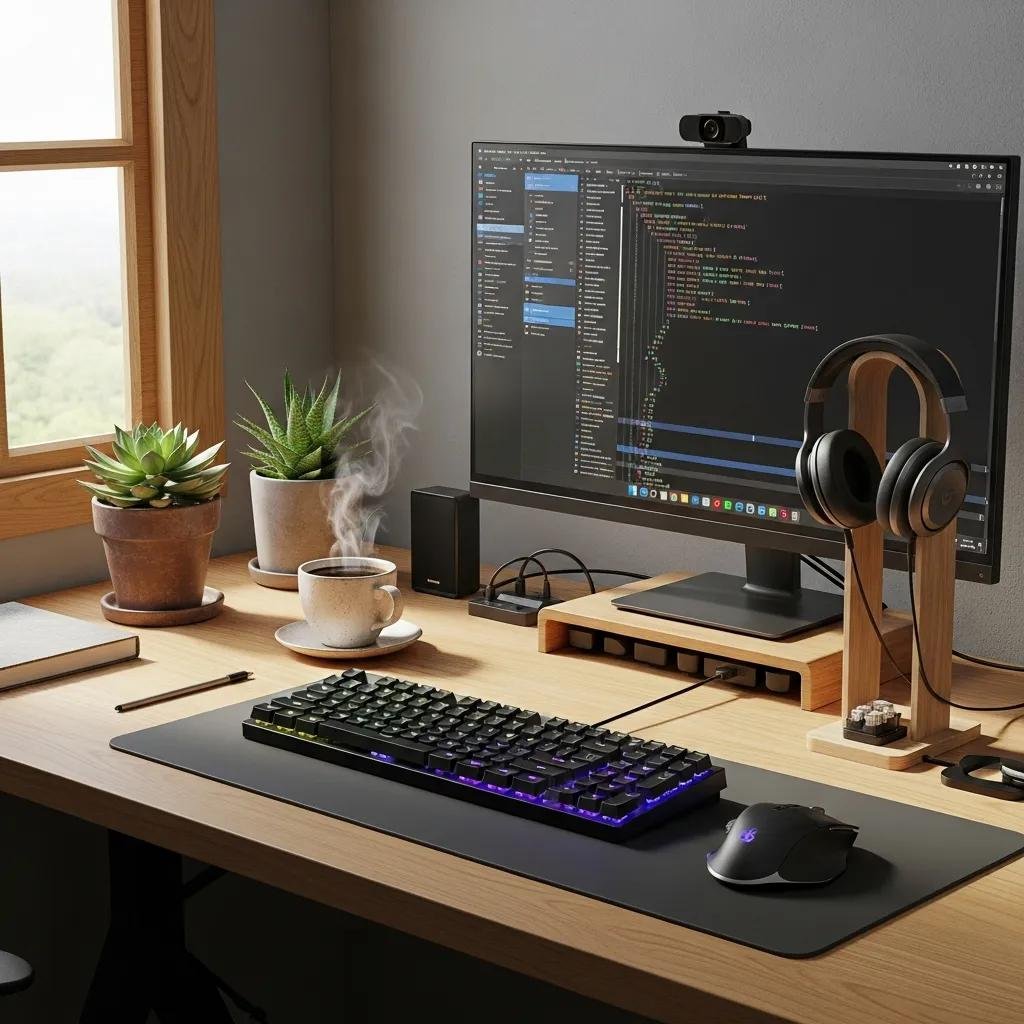
2025 PC Accessories Buying Guide: Top Computer Peripherals
Computer peripherals are the external hardware—keyboards, mice, monitors, headsets, storage, and docking devices—that shape how you interact with a PC, and in 2025 the right accessories emphasize wireless reliability, USB-C/Thunderbolt compatibility, and ergonomics for long sessions. This guide explains which PC accessories matter most for productivity and gaming, what technical specs to prioritize, and practical tradeoffs between cost, performance, and comfort. Many buyers struggle to balance raw performance (high DPI sensors, fast refresh rates, NVMe speeds) with day-to-day comfort (ergonomic shapes, adjustable monitor arms, cable management), so this article gives concise, actionable recommendations that map specific use-cases to accessory classes. You’ll find short buying checklists, comparison tables for keyboards, mice, monitors and external storage, and step-by-step selection criteria for docks and hubs. Target keywords like external hardware, pc accessories, input devices, external SSD vs HDD, and ergonomic monitor arms are woven through the guidance to help you choose components that match your workflow and budget.
What Are the Must-Have Computer Peripherals for Productivity and Gaming?
Must-have computer peripherals are the accessories that materially improve input precision, visual clarity, and audio communication; they work by addressing specific bottlenecks such as latency, comfort, and data throughput. For productivity, prioritize ergonomic keyboards, accurate mice, a high-resolution monitor, and reliable storage; for gaming, emphasize low-latency mice, high refresh-rate monitors, and headsets with clear mics. Below is a concise list of essentials with one-sentence rationales to help you compare priorities quickly.
These essential peripherals bridge the gap between raw system power and real-world performance, and choosing the right combination depends on whether you value comfort, speed, or fidelity.
- Mechanical or ergonomic keyboard: Improves typing speed and reduces fatigue through tactile feedback and ergonomic layouts.
- High-precision mouse (gaming or ergonomic): Offers accurate sensors and adjustable DPI for both productivity precision and gaming control.
- High-resolution monitor: Delivers more screen real estate for productivity and crisper visuals for content and games.
- Quality headset or speakers: Provides clear communication on calls and immersive audio for media and games.
- External SSD or backup drive: Ensures fast transfers and reliable backups for large files and system images.
This prioritized list helps you decide where to invest first depending on whether you work long hours, create content, or play competitively.
Intro to the quick comparison table below explains how each core peripheral differs by primary use-case and key spec.
| Peripheral | Intended Use | Connectivity | Key Spec |
|---|---|---|---|
| Keyboard | Productivity / Gaming | Wired / Wireless | Switch type (mechanical tactile/linear) |
| Mouse | Productivity / Gaming | Wired / Wireless | Sensor DPI / polling rate |
| Monitor | Content / Gaming / Office | HDMI / DisplayPort / USB-C | Resolution / Refresh rate |
| Headset | Calls / Gaming / Media | Wired / Wireless | Mic quality / Codec (low latency) |
This table clarifies tradeoffs so you can prioritize peripherals that match your daily tasks and performance needs.
If you need help configuring or troubleshooting new peripherals after purchase, remote tech support and setup assistance are available through qualified providers that offer remote convenience. mcHelper.com provides remote computer tech support, home wireless network assistance, and general troubleshooting for both Mac and Windows systems; their services can help with device pairing, driver installation, and basic configuration. Using remote assistance offers 24/7 availability and remote access convenience for users who prefer an expert-configured setup or run into driver and compatibility issues, while keeping the focus on selecting the right accessories for your setup.
Which Keyboards Offer the Best Performance and Ergonomics?
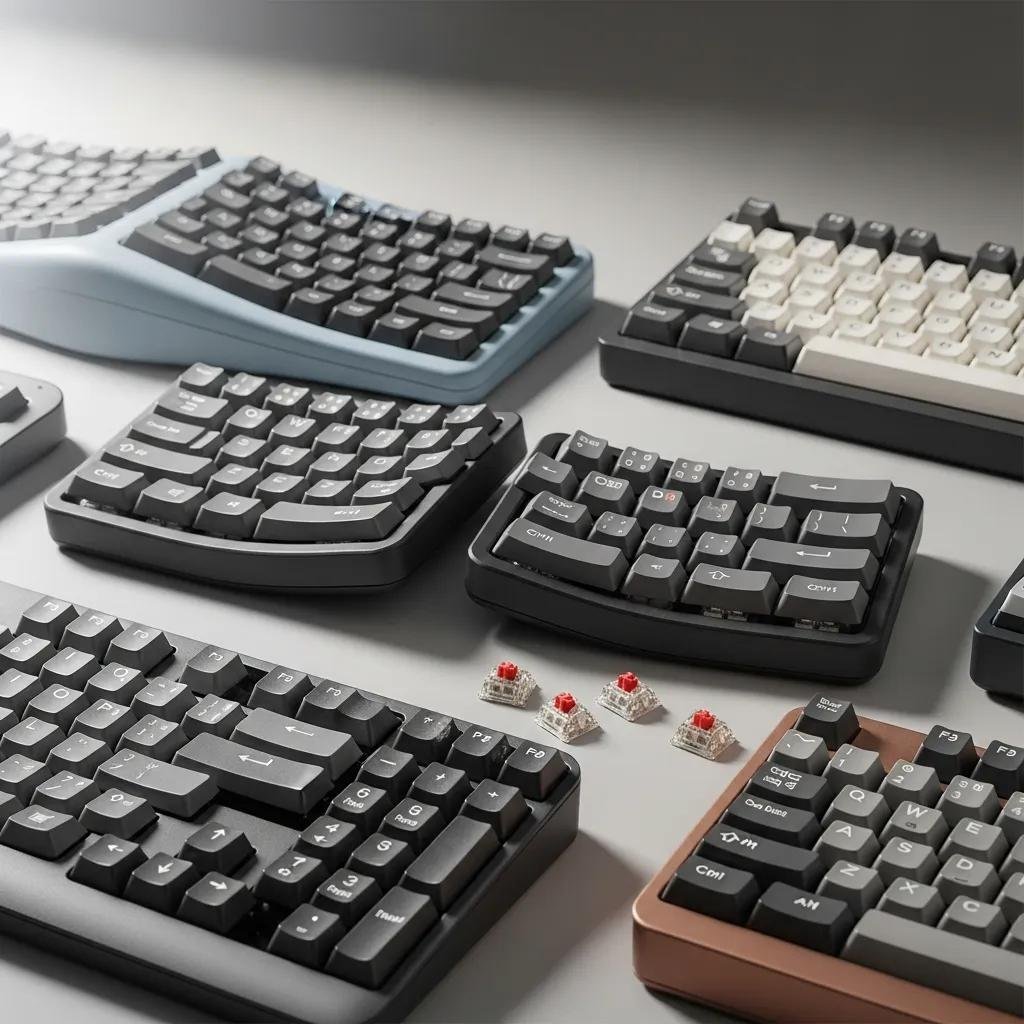
Keyboards that balance performance and ergonomics include mechanical keyboards with appropriate switch types and ergonomic split or tented layouts that reduce wrist strain. Mechanical switches—linear, tactile, or clicky—affect feedback and typing speed, with tactile switches offering a compromise between responsiveness and quiet operation for office environments. Choose form factors (full-size, tenkeyless, 60%) based on numeric keypad needs and desk space, and look for PBT keycaps and hot-swappable sockets if you plan to customize switches. Wireless keyboards using Bluetooth or proprietary low-latency RF can free desk space, but wired USB-C models avoid input lag for competitive gaming.
Keyboards with ergonomic features, like negative tilt, wrist rests, or split layouts, directly reduce repetitive strain and encourage neutral wrist positions, which supports longer, more comfortable sessions and better productivity.
How to Choose the Right Gaming and Productivity Mice?
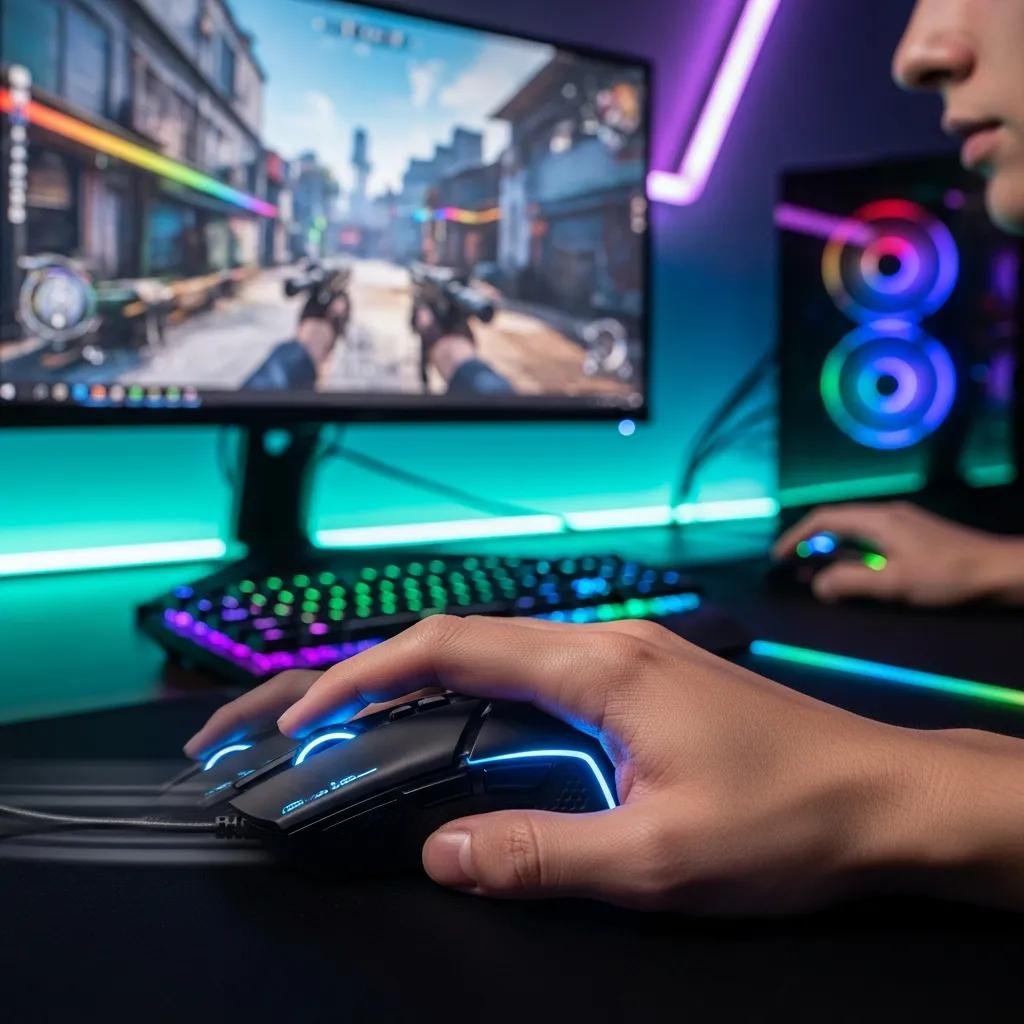
Selecting a mouse hinges on sensor quality, DPI range, grip style, and button programmability, because these attributes determine precision and comfort for different tasks. High-end optical sensors with consistent tracking and adjustable DPI let gamers tune sensitivity for different genres, while productivity users benefit from ergonomic shapes and additional buttons for shortcuts. Match grip style—palm, claw, fingertip—to the mouse shape for sustained comfort, and consider weight tuning if you perform fast-or-slow movements frequently. Wireless mice using modern protocols can offer negligible latency, while wired mice eliminate battery concerns; choose based on whether mobility or absolute responsiveness matters most.
Programmable buttons and onboard profiles are especially useful for power users and streamers who need macro workflows, and adjustable polling rates further fine-tune responsiveness for gaming.
How Do Output Devices Like Monitors and Speakers Enhance Your Setup?
Output devices—monitors and audio systems—improve clarity, reduce eye strain, and shape user perception by delivering higher fidelity visuals and clearer sound, directly enhancing both productivity and immersion. A monitor’s resolution, panel type and refresh rate determine image sharpness and motion handling; speakers and headsets influence communication clarity and spatial audio for media and games. Proper calibration, panel selection (IPS, VA, OLED), and correct placement of speakers or acoustic treatment yield better color accuracy for creators and balanced audio for calls.
Monitors and audio devices work together to present accurate content and comfortable viewing/listening experiences, and your choices should align with whether you prioritize color accuracy, high frame rates, or voice clarity.
- Resolution (e.g., 1440p, 4K): Impacts screen real estate and clarity for multitasking and content work.
- Refresh rate (60Hz–240Hz+): Higher rates smooth motion for gaming and reduce perceived input lag.
- Panel type (IPS/VA/OLED): Affects color accuracy, contrast, and viewing angles for creators.
Summary: Choose a monitor that balances resolution and refresh rate for your tasks—creators favor color accuracy and higher resolutions, gamers favor higher refresh rates and low response times.
What Monitor Features Matter for Work and Gaming?
Monitor features that matter most include resolution-to-size ratio, refresh rate, response time, panel type, and adaptive sync technologies, because they determine clarity, motion handling, and color fidelity. For office productivity, prioritize higher pixel density and larger screens or ultrawide formats to reduce window juggling, while content creators need color-accurate IPS or OLED panels and good factory calibration. Gamers should prioritize refresh rates and low response times (with adaptive sync like FreeSync or G-Sync-compatible modes) to minimize motion blur and tearing; also consider port availability (USB-C/Thunderbolt) for single-cable docking. Balance cost and future-proofing by choosing monitors with modern inputs and ergonomic stands for tilt, height, and swivel adjustments.
These feature tradeoffs guide whether you prioritize visual fidelity or competitive performance when selecting a display.
Which Speakers and Headsets Deliver Quality Audio for PC Use?
Speakers and headsets deliver different benefits: speakers provide open, room-based audio for media, while headsets isolate sound and include microphones for calls and gaming. For office calls and content meetings, headsets with clear microphone elements and noise-reduction features are essential to ensure intelligible speech, whereas multimedia setups benefit from stereo speakers with balanced mids and defined bass. Wireless headsets should use modern codecs and low-latency profiles to avoid lip-sync issues; wired options avoid battery and latency concerns. Streamers and creators often need headsets or microphone-equipped setups with detachable mics and high-quality capture to retain clear vocal reproduction.
In short, choose headsets for private listening and mic quality, and speakers for shared media—both require attention to latency, microphone clarity, and comfort for long sessions.
What Storage and Connectivity Accessories Should You Consider?
Storage and connectivity accessories (external SSDs/HDDs, USB hubs, docking stations) enhance workflow by expanding capacity, speeding transfers, and reducing cable clutter; they operate by offering higher throughput interfaces and centralized port management. External SSDs (particularly NVMe over USB-C/Thunderbolt) provide fast transfer speeds for active projects, while HDDs remain cost-effective for bulk backups. USB hubs and docking stations extend ports and can supply power delivery for laptops, enabling single-cable desk setups. Compatibility with USB-C and Thunderbolt, along with attention to bus bandwidth and power delivery, determines whether a hub or dock meets your needs.
Choose external storage for frequent transfers and SSDs for project work; use docks for laptop-centric single-cable workflows and hubs for light expansion.
Different storage and hub options are summarized in the comparison table below to help match speed, capacity, and portability to your use-case.
| Device | Characteristic | Typical Use-case |
|---|---|---|
| External NVMe SSD | High speed (up to several GB/s) | Editing large media files, fast backups |
| SATA SSD | Moderate speed, lower cost than NVMe | General fast storage and bootable drives |
| HDD | High capacity, low cost | Long-term backups and archives |
| USB-C Docking Station | Port expansion + PD + video | Single-cable laptop workstation |
This table highlights that NVMe SSDs suit active work, SATA SSDs suit general fast storage, and HDDs remain the budget archive option.
If you need help connecting networked storage, configuring a USB hub or docking station, or performing large file transfers and backups, remote home wireless network assistance and computer tech support can simplify setup. mcHelper.com offers home wireless network assistance and computer tech support for Mac and Windows users, including help with configuring networked drives, ensuring correct USB-C/Thunderbolt connections, and advising on transfer/backup strategies. Their remote convenience and certified technicians can be useful when compatibility or driver issues arise during installation.
How to Select External SSDs and HDDs for Backup and Speed?
Select external drives by balancing speed, capacity, and endurance: NVMe SSDs deliver the fastest transfers for active project work, SATA SSDs offer good speed at lower cost, and HDDs provide the best cost-per-terabyte for backups. Consider interface—USB-C/Thunderbolt offers the best performance—and also check endurance ratings and warranty for drives used frequently. For backups, combine an external HDD for cold storage with an SSD for working datasets; for portability, prefer compact NVMe enclosures with robust casing. Finally, ensure your system supports the drive’s interface to realize advertised speeds.
This selection strategy helps you allocate budget between immediate performance (SSD) and long-term capacity (HDD) based on workflow needs.
What Are the Benefits of USB Hubs and Docking Stations?
USB hubs and docking stations provide port expansion, power delivery, and display passthrough that enable a single-cable desk setup and easier peripheral management. Hubs are ideal for occasional port needs and light devices, while docking stations with Thunderbolt/USB-C and PD support are designed for full workstation setups that require external displays and sustained power. When choosing, verify bandwidth limits, PD wattage, and the number/type of video outputs to ensure compatibility with your laptop and monitors. Consider form factor and cooling if you plan to connect multiple high-power devices simultaneously.
A checklist helps evaluate hubs and docks: check PD wattage, video outputs, data bandwidth, and compatibility with your operating system and peripherals.
Why Is Ergonomics Important and Which Accessories Improve Comfort?
Ergonomics matters because properly chosen accessories reduce musculoskeletal strain, increase comfort, and sustain productivity over long sessions by promoting neutral posture and reducing repetitive stress. Accessories such as adjustable chairs, monitor arms, keyboard trays, and wrist rests directly support posture, allowing you to maintain recommended viewing angles and hand positions. Investing in an ergonomic monitor arm or an adjustable chair can alleviate neck and back strain, while keyboard and mouse placement minimizes wrist extension and forearm pronation. Additionally, cable management contributes indirectly by keeping surfaces clear and enabling optimal peripheral placement.
Ergonomic improvements often require configuration and calibration—monitor height, chair adjustments, and peripheral placement—that affect comfort and long-term health, so thoughtful setup is as important as hardware choice.
mcHelper.com’s remote convenience and 24/7 availability can assist users who need help configuring monitor arms, calibrating displays, or installing drivers and software for ergonomic devices. Remote technicians can guide adjustments and software setup to ensure your ergonomic accessories deliver the intended health and productivity benefits without disrupting your workflow.
How Do Ergonomic Office Chairs and Monitor Arms Support Health?
Ergonomic office chairs and monitor arms support health by enabling adjustability in seat height, lumbar support, and monitor position, which together maintain neutral spine alignment and reduce neck strain. Chairs with adjustable lumbar and tilt features let users fine-tune support for sustained sitting, while monitor arms enable correct eye-level placement and reduce forward head posture. Investing in adjustable equipment pays off when you spend many hours at a desk, because small alignment improvements reduce chronic discomfort and improve focus. When selecting, prioritize range of adjustment, build quality, and compatibility with your desk setup.
These features translate into measurable comfort gains and fewer interruptions caused by discomfort during work or gaming sessions.
What Cable Management Solutions Help Maintain a Clean Setup?
Good cable management uses sleeves, trays, clips, and labeling to reduce clutter, improve airflow, and make peripheral swaps easier, thereby preserving both aesthetics and system cooling. Start with a top-level plan: route power and data cables separately, use adhesive clips for desk edges, and employ a cable tray under the desk for power bricks and long runs. Cable sleeves or braided wraps create a unified appearance, while Velcro ties allow reconfiguration; labeling both ends of important cables speeds troubleshooting. Regularly cleaning and inspecting cable runs prevents tangles and accidental disconnections that can interrupt work or damage connectors.
- Use adhesive clips: Route cables along the desk perimeter to keep the surface clear.
- Install a cable tray: Keep power bricks and excess cable lengths under the desk for safety and airflow.
- Label both ends: Mark cables to speed future changes and reduce trial-and-error troubleshooting.
These practical steps create a durable, accessible workspace that supports ergonomic accessory placement and system maintenance.